Dr Mara Clarson
Endocrine Surgery Sunshine Coast
Sunshine Coast-Based Specialist Breast & Endocrine General Surgeon
Dr Mara Clarson
Dr Mara Clarson
Endocrine Surgery
Dr Mara Clarson offers advanced surgical care to patients with thyroid and parathyroid conditions.
In collaboration with a trusted multidisciplinary team, Dr Clarson offers thorough and thoughtful care to patients requiring surgical treatment of their endocrine condition.
Dr Mara Clarson
Endocrine Conditions We Treat
Thyroid conditions
- Benign thyroid nodule/s
- Thyroid nodules are incredibly common and while most are non-cancerous (benign) they sometimes require surgery because of their size or because they are causing symptoms such as difficulty with swallowing or breathing, or pressure in the neck
- Thyroid cancer
- Thyroid cancer is usually highly treatable. Treatment generally requires removal of part or all of the thyroid.
- In specific situations it may also be appropriate to remove some of the lymph nodes in the neck.
- Some patients may require further treatment with radioactive iodine to minimise the risk of cancer coming back.
- Multinodular goitre
- This is a swelling of the thyroid due to multiple nodules
- Thyroid cysts
- These can often be managed with ultrasound guided aspiration however if they are large and recur following aspiration then surgery might be needed
- Overactive thyroid eg Graves’ disease or a toxic nodule
- Usually a patient with an overactive thyroid (hyperthyroidism) will be managed by their GP or endocrinologist with medication. However, if this medication does not work or there is a reason it can’t be taken, then surgery may be needed
Parathyroid conditions
The parathyroid glands are located in the neck, behind the thyroid gland. Most people have 4 of them. They produce and release parathyroid hormones to help control the level of calcium in the blood, an essential mineral in the body. Parathyroid hormone regulates these levels by influencing the rate of bone breakdown, absorption from the gut and reabsorption from the kidneys.
Surgery to remove 1 or more parathyroid glands (parathyroidectomy) is usually only recommended if you develop:
- Parathyroid adenoma – a benign tumour on one of your parathyroid glands.
- Parathyroid hyperplasia – when all four parathyroid glands become enlarged.
- Secondary or tertiary Hyperparathyroidism – when your body is making and releasing too much parathyroid hormone, usually due to chronic kidney disease or chronic vitamin D deficiency.
- Parathyroid cancer (incredibly rare)
Every Patient's Needs Are Different
If you have an endocrine condition that isn’t listed above, please contact Dr Clarson’s rooms to discuss whether a consultation would be appropriate.
Dr Mara Clarson
Endocrine Surgery Procedures
Hemithyroidectomy
Isthmusectomy
Total thyroidectomy
Parathyroidectomy
Dr Mara Clarson
Your Endocrine Surgery Journey
Before Surgery
Initial Consult
Your initial consult with Dr Clarson will include a discussion of your diagnosis, your thoughts and concerns, relevant medical history, physical examination as required, and a collaborative approach to planning the way forward.
This plan may include a review at a particular time interval, arranging further tests or imaging, referral for multidisciplinary input, and/or proceeding with surgery booking.
The duration of an initial consult is 30 minutes. If more time is needed, a further appointment can be made.
You are most welcome to bring along a support person to your appointment.
Please bring with you:
- Current medications list
- Any imaging or pathology reports
- Medicare/ DVA card
- Private Health Fund card
- Completed New Patient Registration Form (unless already returned via email)
Dr Clarson may request pre-operative blood tests or imaging to assist in surgical planning.

Your Surgery
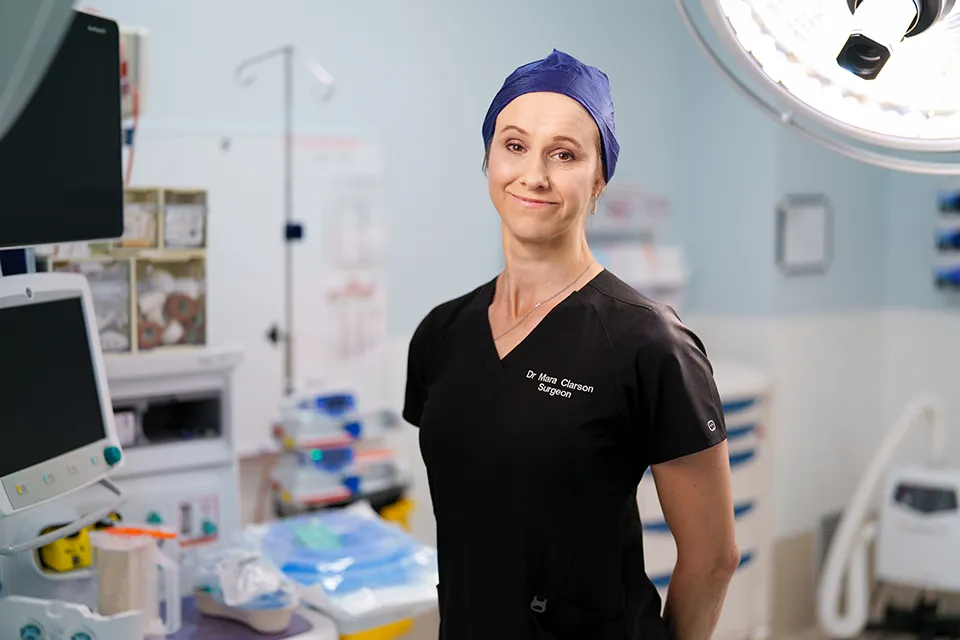
Your surgery will usually take place at the Sunshine Coast University Private Hospital.
Our friendly office staff will call the day prior to confirm what time to arrive at the hospital and when to fast.
- Usual fasting time is 6 hours prior to anticipated surgery start time.
- Clear fluids (water, black tea, clear apple juice) are ok up to 2hrs prior to anaesthetic.
- Longer fasting is required for patients on certain medications, such as GLP-1 agonists (e.g. Ozempic, Mounjaro, Trulicity). Please advise our office if you are taking any such medications.
What to bring to hospital:
- Comfortable clothes
- Usual toiletries
- Usual medications
- Phone charger
- Personal medical equipment such as CPAP machine, hearing aids, mobility aids
After your procedure, Dr Clarson will usually keep you in hospital overnight, and will see you on the ward to check how you are recovering and answer any questions.
The caring team of nurses and hospital staff are here to help make your recovery as comfortable and smooth as possible.
Recovery & Follow-Up
Depending on the type of surgery, you may or may not be admitted to hospital overnight (anywhere between 1-5 nights).
Dr Clarson reviews all her overnight patients on the ward after their procedure and plans a post-operative review appointment, usually for the following week.
Your expected hospital stay and timeframe for healing and return to regular daily activities can be discussed with Dr Clarson at your appointment prior to surgery.
Medical Certificates are available to Dr Clarson’s patients upon request.
Some patients may require ongoing surveillance with repeat blood tests and/or imaging (e.g. ultrasound) under Dr Clarson’s expert guidance and in keeping with national gold-standard care.
Dr Mara Clarson
Why Choose
Dr Mara Clarson
for Endocrine Surgery?
Patient-Focused Approach
Dr Clarson’s genuine care and patient-friendly explanations help her patients navigate their health challenges with confidence.
Multidisciplinary Team-Based Care
Dr Clarson works in collaboration with an experienced multidisciplinary team to achieve the best possible outcomes for her patients.
Modern Surgical Techniques
Dr Clarson is committed to delivering modern, high-quality surgical care in a supportive and respectful environment.
Collaborative Care
Dr Clarson maintains close communication with referring general practitioners, other specialists and allied health professionals, providing ongoing updates during and after treatment to ensure a seamless continuum of care for each patient.
Dr Mara Clarson
Resources and Support

Bloomhill Cancer Care offers a wide range of supports to people facing a cancer diagnosis and treatment. Patients are welcome to self-refer to access Bloomhill’s services.

Providing Australians with patient education, individual support & advocacy with thyroid cancer, all thyroid related conditions, prevention of iodine deficiency & good thyroid health!
Dr Mara Clarson
Frequently Asked Questions
How long will I stay in hospital?
How long will my recovery take?
Each patient’s journey following endocrine surgery is unique. Dr Clarson will arrange a post-operative review appointment, usually for the following week.
Your expected hospital stay and timeframe for healing and return to regular daily activities can be discussed with Dr Clarson at your appointment prior to surgery.
While you can return to most activities 1 – 2 weeks after surgery, it is important to avoid any heavy lifting or straining for 3 weeks after thyroid or parathyroid surgery.
Do I need to take medication following my thyroid surgery?
You will be given medication for pain after your surgery.
Some patients will need Thyroxine, to replace thyroid hormones following surgery.
If you are having only part of your thyroid gland removed (i.e. hemithyroidectomy/ isthmusectomy), thyroid hormone replacement may not be necessary. Whether or not you require thyroid hormone medication is determined based on a blood test to assess thyroid function 6 – 8 weeks after surgery.
If you are having your whole thyroid gland removed (i.e. complete thyroidectomy), thyroid hormone replacement therapy will be required lifelong and will be commenced following your surgery. This thyroid hormone replacement medication may need to be titrated to an appropriate dose for your body and monitored at regular intervals with blood tests.
Some patients may also require calcium and vitamin D supplementation.
In some cases of thyroid cancer, higher doses of thyroid hormone replacement may be required to suppress the body’s feedback signals that can promote thyroid cancer cell growth.
For high-risk thyroid cancers, radioactive iodine (RAI) may also be given as part of your treatment.
Will I have a visible scar on my neck?
Yes, there will be a scar from the surgery. Dr Clarson places the incision along natural skin lines to minimise scar visibility. The length of the incision varies depending on the type of surgery and findings during the surgery.
Scars usually appear red and raised initially but tend to fade and flatten over time. The final appearance of the scar is often only evident around six months post-surgery. Factors such as skin type, age, and individual healing responses can influence scar formation.
Will I be able to eat and drink after my thyroid or parathyroid operation?
What are the risks of thyroid or parathyroid surgery?
Thyroid and parathyroid surgery are safe, but there are potential risks and complications as with any surgery.
Common risks include:
- Mild pain or swelling
- Temporary voice changes or hoarseness
- Low calcium levels
Severe, uncommon complications include:
- Long-term hypoparathyroidism with low calcium
- Permanent vocal cord damage
- Excessive bleeding or hematoma
Risks and benefits will be discussed in detail during your consultation with Dr Clarson prior to surgery.
When should I contact Dr Clarson after surgery?
Dr Clarson will usually see you the week after your surgery.
Please contact her office or present to the Emergency Department if you experience:
- Difficulty breathing, speaking, or swallowing
- Numbness or tingling in your hands or face
- Signs of infection, including pus, fever, swelling, and redness
- Severe pain
- Excessive bleeding